
Sub-Total: $0.00

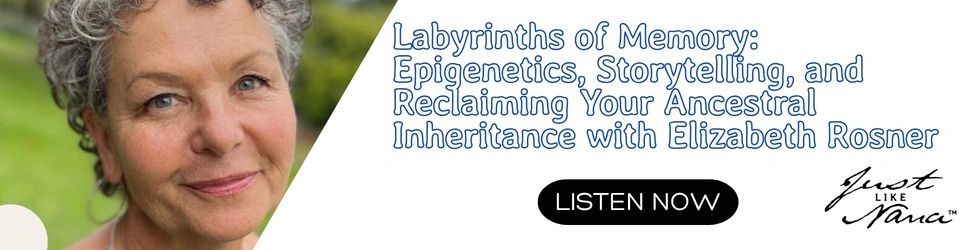
Author and teacher Elizabeth Rosner discusses the importance of naming and acknowledging intergenerational trauma before moving towards healing.
Explore the cultural understanding of intergenerational trauma, the limitations of scientific understanding and the importance of personal and collective histories, and more.
About Elizabeth Rosner
Elizabeth Rosner is an author and teacher whose work focuses on the redemptive power of storytelling and deep listening. Her six books have been translated into twelve languages and have received literary prizes in the US and abroad. Her most recent book, Third Ear: Reflections on the Art and Science of Listening, blends personal stories of growing up in a multilingual household with multidisciplinary research about sound and silence in the natural world. Her previous book, Survivor Cafe: The Legacy of Trauma and the Labyrinth of Memory, was a finalist for a National Jewish Book Award and was named among the best books of 2017 by the San Francisco Chronicle. Elizabeth travels widely to lecture and lead workshops internationally; her teaching carries forward a message of perseverance and tenacious optimism.
The Sharp Edge of the Apple Peel: Cultivating the Courage to Name Our Inherited Shadows
My conversation with the extraordinary Elizabeth Rosner on the latest episode of Just Like Nana was beautiful. Elizabeth is an award-winning author of six books spanning poetry, fiction, and nonfiction, an international writing workshop leader, and a deep thinker whose life’s work focuses on the redemptive power of storytelling and deep listening. Her landmark book, Survivor Café: The Legacy of Trauma and the Labyrinth of Memory, was a finalist for the National Jewish Book Award, and it serves as a breathtaking, vital exploration of how massive historical atrocities ripple through family lines.
I also want to pause and acknowledge a synchronicity. As you know, the entire genesis of Just Like Nana came from building out my own family tree and discovering that I had 45 grandmas named Elizabeth, prompting me to write stories to honor each of them. When Elizabeth Rosner and I connected, she revealed that the name Elizabeth was given to her as a beautiful, linguistic tribute—an anagram matching the letters of her late maternal grandfather, Zalman. Having this specific Elizabeth bring her fierce, luminous energy to our space felt like a direct, profound nod from the universe. We are always exactly where we are supposed to be.
The Magical, Risky Coil
Elizabeth opened our conversation by sharing a memory of her maternal grandmother, Grandma Judy. She recalled how Grandma Judy would travel on the bus carrying boiled chicken in her handbag, and how she would sit with a very sharp little knife, turning the blade dangerously toward herself to peel an apple in a single, unbroken, magical coil.
As a child, Elizabeth saw that unbroken peel as pure magic. But as she grew older and uncovered the depths of her family history, she realized that the image of her grandmother turning that sharp blade toward herself was an exact reflection of who Grandma Judy was: a tremendously courageous woman who had survived the absolute unthinkable.
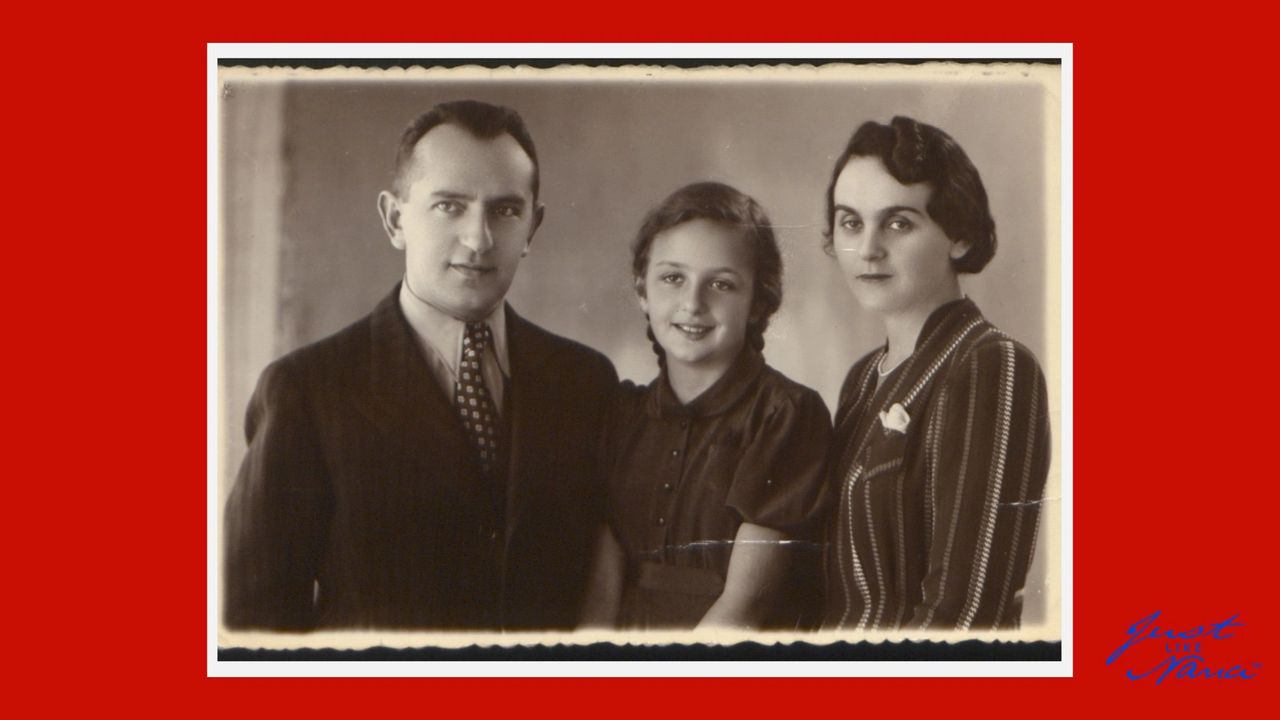
Elizabeth is the daughter of two Holocaust survivors. Growing up, Elizabeth intuitively knew she was marinating in an unexpressed pool of historical grief. She carried an unexplainable hyper-vigilance, a habit of walking on eggshells, and a terrifying fear of things that had no name.
When Science Catches Up to the Bones
The American Psychological Association officially defines intergenerational trauma as the concrete transmission of a trauma legacy—whether from war, structural racism, poverty, or atrocities—from the generation experiencing it to subsequent generations. Today, we understand that this transmission is epigenetic, meaning the intense environmental trauma actually alters the chemical markers of our genes, passing down a biological adaptation of fear and hyper-vigilance to children and grandchildren.
When Elizabeth was writing Survivor Café a decade ago, terms like epigenetics and intergenerational trauma were not readily passed around like they are now. She was writing from a place of pure intuitive knowing.
What Western science is just beginning to validate through empirical data, indigenous cultures have understood since the beginning of time: when you contemplate your life, your purpose, and your choices, you must actively look backward seven generations and forward seven generations. You are a living, breathing continuation of a lineage.
The Radical Act of Naming
One of the most profound lessons Elizabeth shared is that we cannot rush past our history to reach a forced state of healing. In our modern world, we are desperate to look away from discomfort, to fix things quickly, and to jump straight to the “other side” of pain.
But you cannot transform an ancestral shadow until you have courageously spent time looking directly at it, naming it, and acknowledging it as real. Naming the trauma—giving it a meticulous, specific, and dedicated vocabulary—is how we break the toxic grip of defensive secrecy and denial.
Yes, our language is often flimsy. Elizabeth addresses this with an alphabet at the beginning of her book. In doing so, she recognizes that words will always fall short of describing the staggering mysteries of human suffering and human endurance. But trying to find the best words in the best order is our sacred duty. It is how we rescue history from the dark.
Reclaiming the Luminous Inheritance
It is incredibly easy to look at a lineage of trauma and see only the brokenness. But Elizabeth’s work reminds us that ancestral inheritance is a double-sided coin. We do not just inherit the hyper-vigilance; we inherit the gifts.
From her mother, who spoke seven languages, Elizabeth inherited an absolute reverence for beauty, an attunement to language, and a profound capacity for deep listening. From her grandmother, she inherited a fierce courage.
The geneticists, biologists, and psychotherapists who study the human brain agree on something magnificent: though traumatic experiences alter us biologically, those changes are not permanent. We possess the capability to keep changing. We do not get to choose the exact history or genetic blueprint we are handed when we enter this world, but we hold complete sovereignty over what we choose to do with it. The deeper we know ourselves, the more we can consciously choose our own transformation.
Resources Mentioned
- Elizabeth’s Books: https://elizabethrosner.com/books/
Connect with Elizabeth
Website: https://www.elizabethrosner.com/index.html
Instagram: https://www.instagram.com/elizrosner/
Goodreads: https://www.goodreads.com/author/show/61096.Elizabeth_Rosner
Connect with the Show
- Website: justlikenana.com
- Share Your Story: If you have a family story or trauma you’re exploring, reach out via our website for a chance to be interviewed.