
Sub-Total: $0.00

02/20/2026 |
Content Warning: This episode includes mention of sexual assault.
In this episode of Just Like Nana, host Amie (Elizabeth) Penny Sayler is joined by Dr. Peter Levine to discuss how trauma lives in the body and, more importantly, how the trauma cycle can be completed to restore a sense of inner peace.
They unpack the signs– persistent physical symptoms, repetitive relationship patterns, feeling disconnected from your own life– that point to the roots of your struggles, which are not just in your mind but etched into your physiology as intergenerational trauma. If any of this sounds familiar to you, this conversation will give you the guidance to take the next step in seeking support and releasing that held trauma.
About Dr. Peter Levine
Peter A Levine, Ph.D., is the developer of Somatic Experiencing® (SE™), a naturalistic and neurobiological approach to healing trauma, which he has developed over the past 50 years. He holds a doctorate in Biophysics from UC Berkeley and a doctorate in Psychology from International University. He is the Founder and President of the Ergos Institute of Somatic Education and the Founder and Advisor for Somatic Experiencing International, where his work has been taught to over 30,000 healers in over 42 countries. He recently finished his Autobiography, An Autobiography of Trauma, A Healing Journey, and is the author of several best-selling books on trauma, including Waking the Tiger, Healing Trauma; In an Unspoken Voice, How the Body Releases Trauma and Restores Goodness; and Trauma and Memory, Brain and Body in a Search for the Living Past.

Somatic Experiencing: How to Release Trauma Stored in the Body with Dr. Peter Levine
At Just Like Nana, I usually encourage you to grab some tea, find some comfort, and settle in to listen to the episode. But today, I want you to grab something a little extra—maybe hot cocoa with mini marshmallows. Because today, we are sitting down with a man who has fundamentally changed the way the world understands human suffering and recovery: Dr. Peter Levine.
Dr. Levine has been studying how to release trauma since the 1960s. He is the developer of Somatic Experiencing and the author of the seminal book Waking the Tiger. To say I was excited to speak with him would be an understatement. But as soon as we began, I realized that for all his accolades—the double doctorates, the NASA consultancies—he is, above all, a gentle soul and a deeply empathetic human being.
One of the first things Dr. Levine and I discussed is a concept that sits at the heart of everything we do here at Just Like Nana: the idea that our bodies are living libraries of our own history and our ancestors’ history.
We often think of trauma as a mental problem, something that lives in our thoughts or our memories. But Dr. Levine explained that trauma is actually a physiological “bracing.” It’s a defensive response that got stuck in time. When we experience an overwhelming event, our bodies prepare to fight or flee. If we can’t do either, that energy becomes trapped.
He spoke specifically about the vagus nerve. Amazingly, 80% of the information traveling through that nerve is going up from the body to the brain. Our organs and our muscles are constantly sending messages to our minds about whether we are safe or in danger. When we carry unresolved trauma, our body is stuck sending a “danger” signal, even when the threat is long gone.
The Ancestral Web: Is Your Pain Truly Yours?
As we delved deeper, we touched on a topic that resonates so much with our mission of ancestral healing. Dr. Levine confirmed what many of us feel in our bones: trauma isn’t just personal; it’s intergenerational.
He described it as an “energetic pattern.” Sometimes, the anxiety we feel or the chronic pain we carry isn’t actually ours. It might belong to a grandmother who had to flee her home, or a great-grandfather who couldn’t express his grief. These patterns are passed down through the family line, woven into our very physiology and by recognizing these patterns, we aren’t just healing ourselves; we are performing a retrospective act of love for those who came before us. We are “unhappening” the trauma that they didn’t have the resources to resolve.
The Gift of the “Connected Other”
One of the most moving parts of our conversation was when Dr. Levine spoke about the necessity of connection.
When we are traumatized, we often dissociate. We feel “floaty,” or we check out of our bodies because the physical sensations are too much to bear. Dr. Levine explained that to come back into our bodies—to “thaw” the freeze—we often need a “connected, empathetic other.” We need someone to sit with us, to be with us, and to guide us back to a sense of safety.
This is why community is so vital. Whether it’s a professional therapist or a deeply trusted friend, having someone witness our process allows the light to finally break through the darkness. We aren’t meant to heal in total isolation.
Writing Your Autobiography of Trauma
Dr. Levine shared a beautiful exercise that you might consider. He suggests writing your own story; not just the facts, but the sensory experience of your life.
He told a story about his Grandma Bertha’s apple pie. That memory wasn’t just a thought; it was a bodily experience of warmth, sweetness, and safety. He calls these “islands of safety.” When we begin to document our stories, we find these islands. We find the moments of “goodness” that exist even alongside the pain.
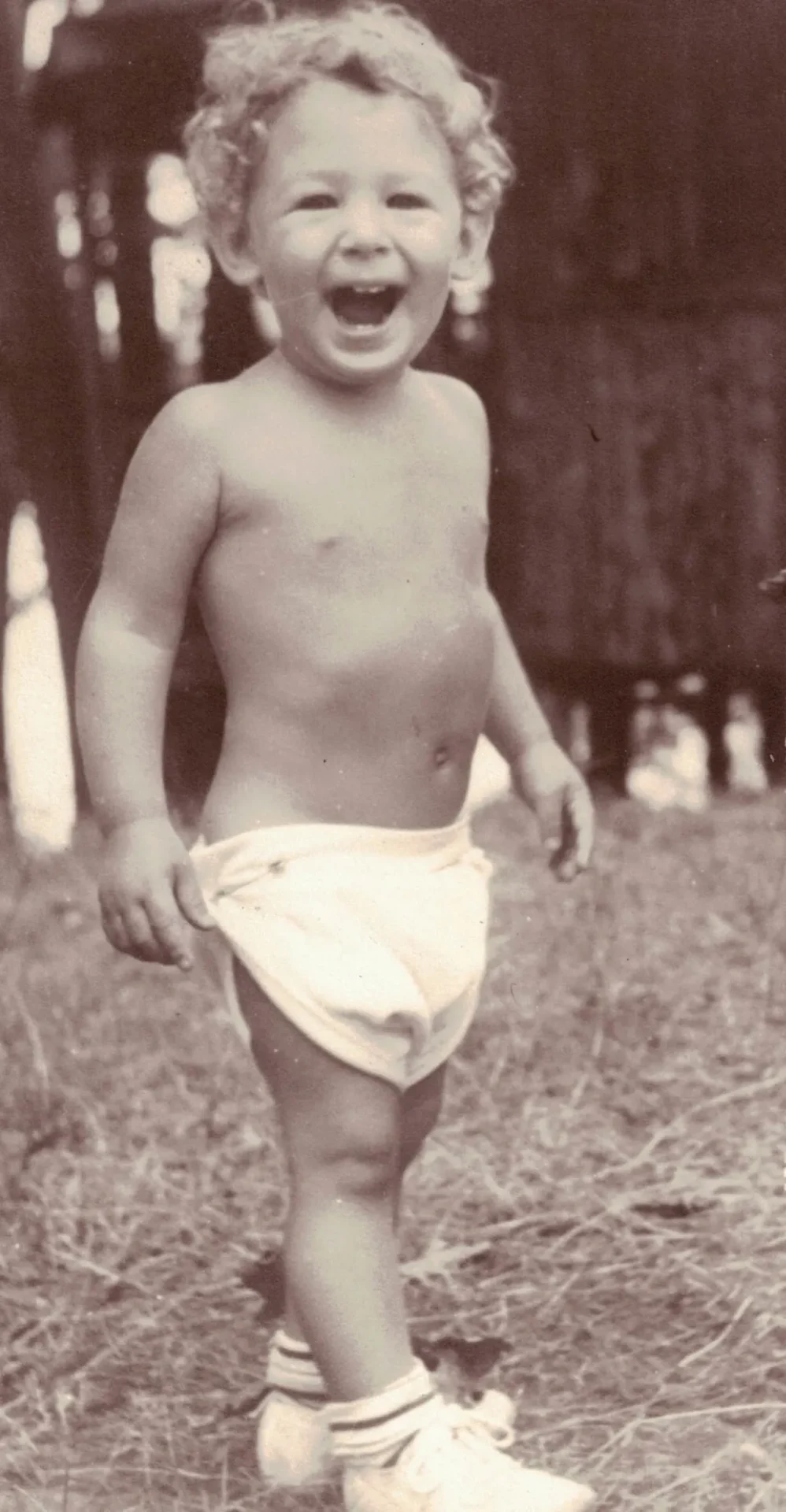
I told him that this is exactly my goal with the book I’m working on, and his encouragement meant the world to me.
A Gift You Deserve
As we wrapped up our conversation, Dr. Levine left us with a powerful reminder: we all deserve to be supported. We all deserve to feel a sense of peace in our own skin.
If you’re struggling with chronic symptoms or a heavy heart, please know that you don’t have to stay “braced” forever. There are resources available to help you navigate this. You can find more about Dr. Levine’s work at somaticexperiencing.com or traumahealing.org.
I hope this conversation brings you as much hope as it brought me. Healing is a slow process. It’s about small shifts, not sudden leaps. But with each shift, we get a little closer to that “goodness” that is our birthright.
Take a deep breath. Feel your feet on the floor. You are here and you are not alone.
Connect with Dr. Peter Levine
- Somatic Experiencing Website: https://www.somaticexperiencing.com/ or https://traumahealing.org/
- An Autobiography of Trauma: A Healing Journey is available at: Ergos Institute, Barnes & Noble, Amazon, Amazon UK, Inner Traditions, Books A Million, and Bookshop.org
Connect with the Show
Are you curious about the “Elizabeths” in your own family tree? We want to hear from you!
- Website: justlikenana.com
- Share Your Story: If you have a family story or trauma you’re exploring, reach out via our website for a chance to be interviewed.